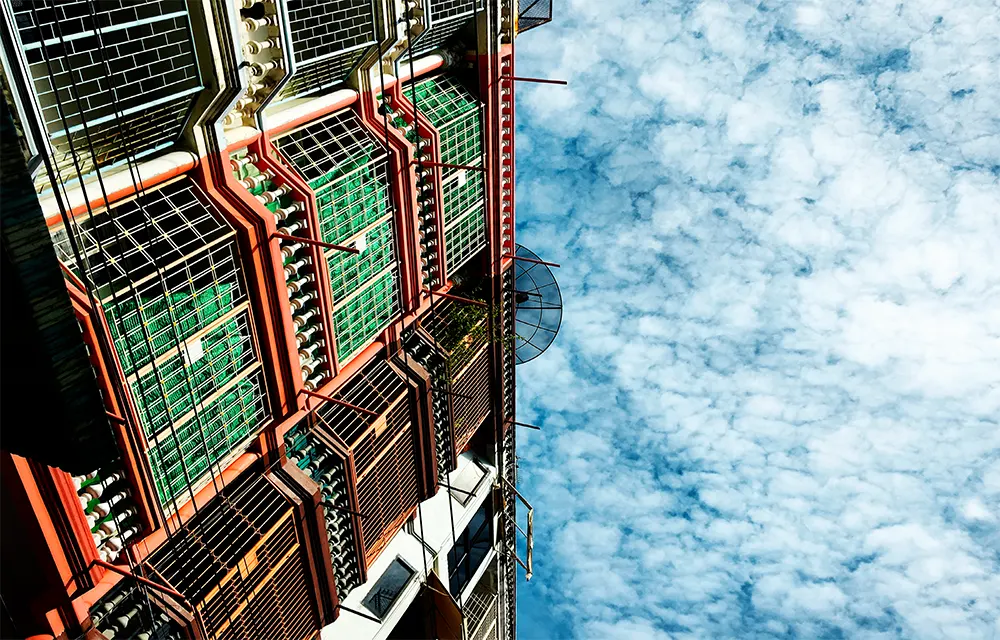
As global urbanization continues and security risks evolve, the need for blast-resistant construction has become a critical aspect of modern engineering. While traditional methods relied heavily on mass and strength, today’s solutions emphasize innovation in materials, combining strength, flexibility, and energy absorption to minimize damage from explosions and protect lives.
This article explores the cutting-edge materials, technologies, and research driving blast-resistant construction and design, showing how engineering is redefining resilience in high-risk environments such as urban centers, government facilities, and critical infrastructure.
Understanding Blast-Resistant Construction
Blast-resistant construction refers to the engineering design of buildings capable of withstanding the dynamic pressures generated by explosions. The primary objective is to limit structural failure, protect occupants, and reduce secondary hazards caused by debris or collapse.
While structural form and design play vital roles, materials are the backbone of any blast-resistant construction strategy. They determine how a structure absorbs, dissipates, and withstands explosive forces.
A well-engineered structure doesn’t necessarily eliminate damage it ensures controlled failure that protects human life and critical functions.
The Evolution of Materials in Blast-Resistant Construction
Historically, blast-resistant construction relied on massive reinforced concrete walls and thick steel frames. While effective, these solutions were heavy, expensive, and often architecturally restrictive.
Today, with advances in material science and computational modeling, engineers use innovative materials that combine lightweight construction with superior energy absorption. These developments enable greater safety, flexibility, and architectural freedom, without compromising performance.
Key Material Innovations in Blast-Resistant Construction
- High-Performance Concrete (HPC)
Traditional concrete tends to crack or spall under high strain rates caused by explosions. High-Performance Concrete (HPC) and its advanced form, Ultra-High-Performance Concrete (UHPC), have changed that.
- Compressive strength: Often exceeding 150 MPa, providing exceptional resistance to blast overpressure.
- Improved ductility: Allows concrete to deform slightly without catastrophic cracking.
- Fiber reinforcement: Incorporates steel, glass, or polymer fibers to improve tensile capacity and reduce fragmentation.
UHPC panels are increasingly used in military and government facilities due to their high strength-to-weight ratio and excellent durability.
- Composite Materials and Fiber-Reinforced Polymers (FRP)
Fiber-Reinforced Polymer (FRP) composites are revolutionizing structural retrofitting and blast protection. These materials consist of fibers (carbon, glass, or aramid) embedded in a polymer matrix, offering high tensile strength and corrosion resistance.
Applications include:
- Retrofitting existing structures: Strengthening columns, walls, and slabs to resist blast loads.
- Blast barriers and façades: Flexible, lightweight systems that absorb impact energy.
- Protective coatings: Applied to surfaces to reduce debris ejection during explosions.
Carbon FRPs, in particular, are preferred for their high stiffness and energy dissipation capacity, making them ideal for both retrofits and new builds.
- Laminated Glass and Advanced Glazing Systems
Windows are one of the most vulnerable elements in a blast event. Laminated glass, composed of multiple glass layers bonded with polyvinyl butyral (PVB) or ionoplast interlayers, prevents shattering and flying debris.
Modern systems combine laminated glass with energy-absorbing frames, creating façades that deform elastically under blast pressure. This not only protects occupants but also helps maintain the building’s enclosure integrity after an explosion.
- Steel Alloys with High Ductility
High-ductility steel alloys are essential in structures that require deformation without sudden failure. Unlike traditional brittle materials, these steels can bend, stretch, and absorb energy, minimizing structural collapse.
Recent innovations include:
- Dual-phase steels: Combining high strength with excellent formability.
- Austenitic stainless steels: Resistant to corrosion and suitable for long-term blast resistance in coastal or humid environments.
- Shape-memory alloys (SMA): These metals return to their original shape after deformation, offering self-restoring capabilities after a blast.
- Energy-Absorbing Materials and Sandwich Panels
Sandwich panels consist of two high-strength outer skins (often steel or composite) bonded to a lightweight core made of foam, honeycomb, or metallic lattice structures.
The core acts as a shock absorber, dissipating blast energy before it reaches critical structural elements. These panels are increasingly used for:
- Façades in high-security buildings
- Roof assemblies in industrial facilities
- Modular blast walls and partitions
Their lightweight yet resilient structure provides flexibility and design versatility for both retrofits and new constructions.
- Reactive and Smart Materials
One of the most exciting developments in blast engineering is the use of smart materials, those capable of responding dynamically to external stimuli such as pressure, heat, or vibration.
Examples include:
- Self-healing concretes that close micro-cracks when exposed to moisture or CO₂, maintaining structural integrity.
- Piezoelectric materials that convert blast shock into electrical energy for monitoring systems.
- Magnetorheological fluids that stiffen instantly under magnetic fields, providing real-time adaptability to shock loads.
These technologies are paving the way for self-monitoring and self-adjusting structures, improving both safety and maintenance efficiency.
Integrating Material Innovations into Blast-Resistant Construction
Material innovation alone isn’t enough; it must be integrated thoughtfully within the overall blast-resistant construction strategy. This involves:
- Multilayered defense systems: Combining concrete, steel, and composites to achieve energy absorption and redundancy.
- Computational modeling: Using simulations (e.g., finite element analysis) to predict material performance under blast loads.
- Hybrid materials: Merging the best properties of metals, polymers, and ceramics for optimal resilience.
- Performance-based design: Tailoring materials to meet specific threat levels, rather than relying solely on prescriptive standards.
When these innovations are used strategically, engineers can create structures that are not only stronger but smarter adapting to changing threat environments and performance needs.
Applications of Blast-Resistant Materials
Blast-resistant materials are used in various sectors where public safety, security, and infrastructure integrity are priorities:
- Government and defense buildings: Embassies, command centers, and military bases.
- Transportation hubs: Airports, train stations, and tunnels.
- Industrial facilities: Chemical plants, refineries, and energy storage sites.
- Urban developments: Public plazas, stadiums, and mixed-use buildings in high-density areas.
Each application requires a unique combination of materials to balance aesthetics, performance, and cost-efficiency.
Challenges in Blast-Resistant Material Adoption
Despite their advantages, these materials face challenges that limit widespread adoption:
- Cost: Advanced composites and UHPC can be significantly more expensive than conventional materials.
- Complex design requirements: Integrating multiple material systems requires specialized expertise.
- Testing and validation: Real-world blast testing is expensive and logistically complex.
- Aesthetic integration: Balancing architectural beauty with security can be difficult, especially in public buildings.
However, as research progresses and economies of scale improve, the cost of these materials is expected to decrease, making them accessible for a wider range of projects.
The Future of Blast-Resistant Construction
The future of blast-resistant construction lies in adaptive and intelligent materials that can sense, respond, and recover from impact. Integration with digital monitoring systems, AI-based predictive models, and real-time structural health tracking will revolutionize the way engineers approach safety and resilience.
In the coming decades, buildings will not just resist blasts, they will analyze and communicate their condition, providing invaluable data for maintenance and emergency response.
Conclusion
Material innovation is at the heart of modern blast engineering services, driving a new generation of safer, more resilient buildings. Through the use of high-performance concrete, composites, smart materials, and energy-absorbing systems, engineers are transforming how structures respond to extreme events.
As cities grow denser and security challenges evolve, these innovations are not merely technological advancements, they are essential investments in urban resilience and public safety.
If you need consultant on blast-resistant construction or blast engineering services you can contact our team of professional engineers today.